Can You Multiclass Into the Same Class 5e
Hey there! This website does contain affiliate links. If you lot purchase something through this page, Cats and Dice may earn a share of sales from the link. Learn more.
Sometimes, your rogue can't get sneak attack in as frequently as you'd like. Other times, your ranger needs to become some good melee hits in. Or sometimes, your barbaric simply wants to bandage a few spells. For all this, yous demand multiclassing. And to understand multiclassing, this is the D&D 5e multiclassing guide you need to read.
Multiclassing does not need to be complicated in fifth edition. Since it is an optional ruleset, though, it's important to empathize how it works before you decide to build a monk-sorcerer-bard (or any cool combination you're thinking of). You will want to make sure you empathise what multiclassing entails and whether or not you run across the requirements to do it before you endeavor. For any multiclassing question you have, nosotros have the answers in this D&D 5e multiclassing guide.
What is D&D Multiclassing in 5e?
Every character in Dungeons and Dragons starts out with a single course. That form determines the character's skill set. Some classes specialize in spellcasting, while others are corking melee fighters. Your class will affect how you lot play the game, not only in gainsay, only through your backstory and roleplaying choices, too.
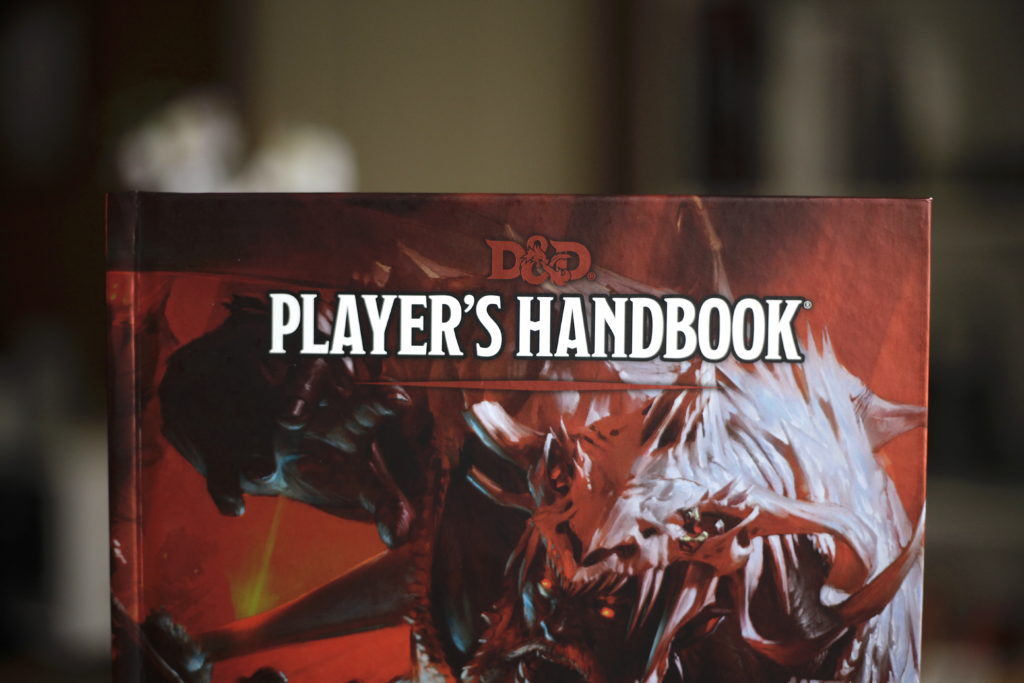
Once a character reaches a higher level, you can have them multiclass according to the ruleset bachelor on pages 163-165 in the Thespian'southward Handbook. This means that the graphic symbol will now have more than than one form, giving them more abilities beyond what a single class tin can do. Nosotros'll simplify the official ruleset first. Then, let's talk more later virtually why multiclassing might be a adept or bad choice for your D&D character.
Who can Multiclass in 5e?
Before you go any farther with D&D multiclassing, ask your Dungeon Principal if they allow multiclassing in their game. Like feats and flanking, multiclassing is an optional ruleset. Whether or not your DM allows multiclassing, yous will notwithstanding want to read this D&D 5e multiclassing guide to sympathise why or why not. Simply the DM's ruling is required before you can multiclass.
And then, anyone tin multiclass once two ruleset weather condition are met:
- They level upward.
- They meet the power score minimums.
The prerequisites for a form involve having a minimum of thirteen in the most relevant score for that class. The nautical chart below gives yous the exact ability score y'all need to multiclass in every D&D 5e class. You can also detect (well-nigh of) this chart on page 163 of the Player'southward Handbook.
| Class | Ability Score Minimum |
| Artificer* | Intelligence 13 |
| Barbarian | Strength 13 |
| Bard | Charisma xiii |
| Blood Hunter* | Strength thirteen or Dexterity thirteen, and Intelligence thirteen |
| Cleric | Wisdom xiii |
| Druid | Wisdom 13 |
| Fighter | Force 13 or Dexterity 13 |
| Monk | Dexterity 13 and Wisdom 13 |
| Paladin | Strength 13 and Charisma 13 |
| Ranger | Dexterity thirteen and Wisdom thirteen |
| Rogue | Dexterity 13 |
| Wizard | Charisma 13 |
| Warlock | Charisma thirteen |
| Wizard | Intelligence 13 |
Think, this is for both the course you lot wish to multiclass to and the grade you currently are. So if you are a Barbaric who wants to multiclass into a Warlock, you need a Charisma score and a Strength score of at least thirteen.
How Does Multiclassing Work in D&D?
In one case you've met the minimum requirements outlined above and your character levels upward, you tin can at present accept them multiclass.
Whenever a character levels up, there are potentially changes to their levels, experience points, hit die, proficiency bonus, spells, spell slots, and features. Some of these things add to each other when multiclassing, and some of them exercise not. Here is the breakdown for each kind of alter.
Levels and Experience Points
When yous multiclass, you lot have dissimilar levels in each class, which lead to a combined overall level. For example, if you lot are a Level v Fighter who multiclasses into a Rogue at your next level, that means you are a Level v Fighter and a Level 1 Rogue for a combined character level of 6. Once you lot attain level 7, y'all will determine which class you want to level upwardly (or cull a 3rd ane!).
Merely like levels, your experience points equal your overall level and are not separated. Then to get the character above to Level 7, yous will all the same demand to achieve 23,000 XP every bit shown past the chart on page fifteen of the Player's Handbook.
Hitting Die
Hit dice are much simpler. You lot simply have the striking dice for that class equal to the level for that class. Simply similar with a unmarried class, y'all always get hitting dice equal to your current level. A Level 5 Fighter has 5d10 hit die, while a Level 1 Rogue has 1d8 hit dice. That would mean your Level vi character would take 5d10 and 1d8 hit dice. Should your classes happen to have the same type of striking dice, and then they stack.
Proficiency Bonus
This 1 is even easier. Your proficiency bonus always matches the chart on page 15 of the Actor's Handbook for your combined overall level. In other words, multiclassing does not alter anything nigh your proficiency bonus.
Spell Slots
Spell slots (not to be dislocated with spells themselves, discussed in the features department) are easy if you are not already a spell caster similar a monk or a barbaric. You only get the abilities for the levels in your new spellcasting class.
If your character is already a spellcaster multiclassing into another blazon of spellcaster, things start getting specific for each class. That's because some classes rely on spellcasting more heavily than others.
First, a rule for multiclassing in all spellcasting classes: your spell slots per level remain roughly the aforementioned every bit if yous had not multiclassed. In other words, your spell slots practice not but add for each class.
Instead, visit the chart on page 165 of the Histrion's Handbook to calculate your specific spell slots. Or, you lot can use this cool spell slot reckoner.
To calculate the spell slots for your D&D multiclassing grapheme, become through these steps:
- Add all your levels in bard, cleric, druid, magician, and wizard together.
- Halve your levels in paladin and ranger rounded down.
- Halve your levels in artificer rounded upwards.
- Tertiary your levels in fighter and rogue (if you are an Eldritch Knight or Arcane Trickster).
Once yous've added these totals together, you lot volition have a adding for how many spell slots you have and in which level with the help of the Handbook's chart.

Features
Each class also comes with unique features (non to be confused with feats). Some features stack and some exercise non.
By and large speaking, you gain the features for your level in that class. For case, a level one barbarian can rage, no matter what levels you have in anything else. A level two rouge can bonus action undo or hibernate. Whatever features your class has at that level, y'all generally gain them.
Notwithstanding, some form features do not stack if you already have them. Channel Divinity, Unarmored Defense force, or Extra Assail are all features that y'all do not go more than one time, even if you have multiclassed into multiple classes that have these features.
Spells work in a similar mode. Yous do not go to learn a high-level spell equally a high-level character only because y'all took ane level in spellcasting. A character who multiclasses into a sorcerer, for example, can only cull spells from the Level 1 Magician spell list.
Equally a effect, if you multiclass into 2 spell casters, y'all might take spell slots for levels of spells you cannot bandage. You lot tin instead utilize those higher-level spell slots to cast lower-level spells at a higher level.
You do get a new fix of cantrips by multiclassing into ii classes of spellcaster, though, but just for your new spellcaster class. In other words, if you were originally a bard and take a level in cleric, yous will get new cleric cantrips simply not new bard cantrips.
Subclasses
Currently, in that location is no official manner to multiclass between several subclasses of the same class. In other words, the rules practice non give the pick to stack subclasses of the same class. A druid cannot exist function of both the Circle of the Moon and the Circumvolve of Dreams, for example. This is probably considering subclass abilities exercise not occur in a uniform style and were not congenital for picking and choosing.
This does not mean that your Dungeon Master would not allow multiclassing in subclasses of the same class. If they practise, though, it would exist a homebrew choice and not part of any official ruleset.
Why Multiclass?
Now that you lot know the how of D&D multiclassing, you might exist wondering why you would multiclass. Alternatively, you may have come to this D&D multiclassing guide knowing exactly why you want to multiclass simply haven't considered why you would not multiclass. Take a moment to consider the options now.
Roleplay
First, yous might multiclass for roleplaying reasons. Some common in-game reasons to multiclass in D&D are below.
- Friendship: Your graphic symbol might have learned a great bargain from another character of another form.
- Necessity: Difficult times might take required a character to develop skills in another class.
- Opportunity: A character might take had the opportunity to learn or train with someone in a certain class. Similarly, they might have come up across an inspirational item.
Many roleplaying reasons tin can justify multiclassing. Simply make certain your Dungeon Primary agrees starting time.
Combat
Some players multiclass to optimize a character and make them as stiff as they can be. Certain multiclassing combinations can create powerful results in combat. For example, multiclassing as a barbaric/rogue tin exist quite powerful when you consider the following combat example:
- Utilise a bonus activity to rage in your barbarian grade, giving you advantage on the attack.
- Utilize your action to attack a monster with reward.
- Should that attack hit, y'all will go to roll sneak attack damage from your rogue class because you had advantage on the attack as a barbarian.
D&D multiclassing, when carefully considered, can provide all kinds of powerful and interesting gainsay combinations.

Why Not Multiclass?
Everything up to this point may accept sounded like a strong pitch in favor of multiclassing. So why wouldn't you lot have your character multiclass? There are a few reasons, but they are also skillful ones.
Your Dungeon Master does not allow multiclassing.
This is the most straightforward reason to not multiclass. At that place are many reasons a DM might not permit it. They might consider information technology difficult to rail, imbalanced, unfair, or unfitting to their game.
If your DM does non permit multiclassing, information technology may be worth having a curt and open discussion almost it. Consider pointing them to this D&D multiclassing guide if they accept questions. But if your Dungeon Master has settled on non allowing multiclassing, practice not push the issue. Multiclassing is an optional ruleset, and it is the DM's right not to use it.
Yous will miss out on higher-level features.
Your graphic symbol's overall level still maxes out at Level 20 when multiclassing. That means you will miss out on some higher-level features. Multiclassing is not inherently the nearly powerful way to play a character for this reason.
Spellcasters, in particular, might non ever access ninth-level spells if they multiclass too much, fifty-fifty if they have ninth-level spell slots. Once again, you can only access spells available to your graphic symbol's level in that particular form, then if your wizard never reaches level 17, and then they'll never get that sweet, sweet Wish spell.
Beyond This D&D 5e Multiclassing Guide
On the off-chance this D&D 5e multiclassing guide did not cover what you need, there are a couple of resources nosotros recommend to accompany it. First, brand sure y'all have a copy of the Player'south Handbook, and read the department on multiclassing thoroughly. (Information technology is found on pages 163-165.)
And then, watch the Handbook Helper on D&D 5e multiclassing beneath.
Finally, make certain to share your thoughts and questions in the comments below. Does annihilation all the same confuse yous? Every bit a seasoned role player, do you have recommendations to players multiclassing for the first time? Share them in the comments to contribute to the best D&D 5e multiclassing guide.

Hello there! I'm Kristen Seikaly. I'm a game writer, a Dungeon Master, and like you, I love tabletop games. Visit our Nearly page to learn more about me.
I wrote this Cats and Dice article to assist you enjoy gaming even more. Did it help? If so, our kitties (and our site) would be grateful for a lilliputian gift through Ko-Fi.
Source: https://catsanddice.com/dnd-multiclassing-guide-5e/
0 Response to "Can You Multiclass Into the Same Class 5e"
Post a Comment